

Five Design Trends That Probably Won’t Last Another Decade
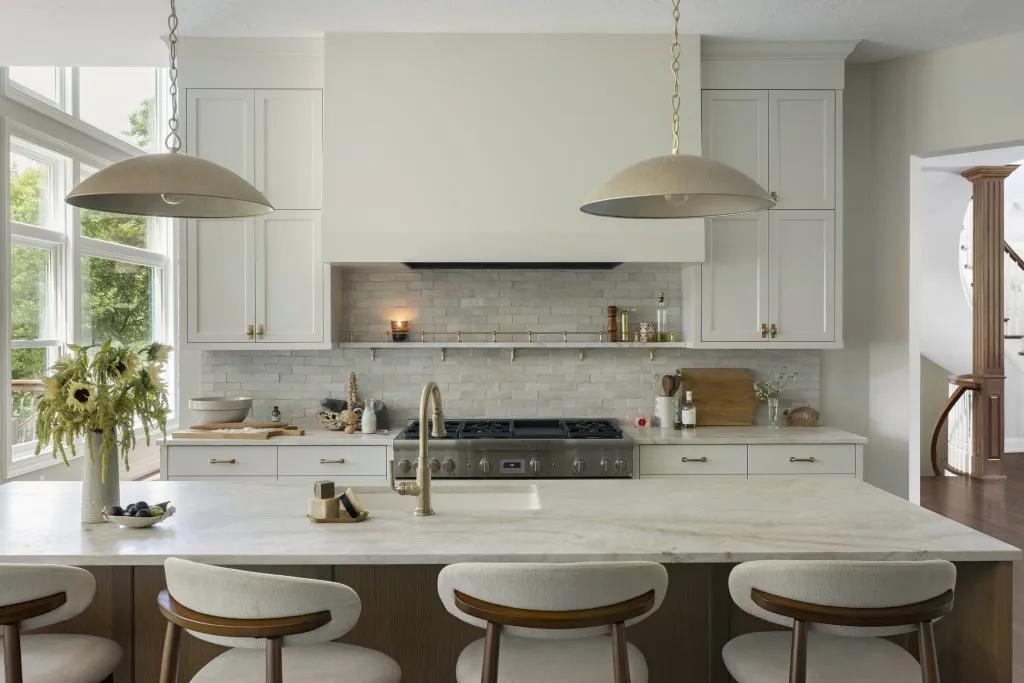
Every era of home design has a look that feels permanent until it doesn’t. After years of working in homes that have outlived several of those looks, here are the five we expect will feel dated by 2036.
1. Engineered quartz countertops
Quartz has been the default upgrade for years, and it is still the most popular countertop material in many markets. The pressure on it is growing, though. Australia banned engineered stone in 2024 after a surge of silicosis among the workers who cut and polish it, and California regulators have begun a process to consider restricting the fabrication of stone with high silica content.
Manufacturers argue it can be fabricated safely with the right controls, so the outcome is not settled. We expect more homeowners to ask where a material comes from and who handled it before it reached their kitchen, and we think natural stone, solid surfaces, and low-silica options will gain ground as a result. Furthermore, the tolerance for natural stone has increased. Imperfection is a buzzword clients are embracing as we lean into what will outlast trends and stay with the era of a home, in many cases.

2. Wood-look vinyl plank flooring
We’ve used these floors in our office, yes we did, and a few lower levels and some niche areas with high traffic/water. Luxury vinyl plank solved a problem by giving people a durable, water-resistant floor at a modest price. The challenge is that it is a printed image of wood, and it cannot be sanded or refinished the way real hardwood can. When a plank is damaged or the style falls out of favor, the whole floor tends to be replaced. In addition, most staircases now are leaning into wood treads and decorative floor runners, tying these wood elements into an LVP floor just isn’t possible, and cheapens the integrity of a home.
We assume homeowners to lean back toward materials that wear in rather than wear out, like solid wood, stone, and tile, because those can be repaired and refinished for decades. Nowadays engineered wood floor has become the best trade off, one we’ve been using for years when clients want the wide plank aesthetic, but when possible we use solid hardwood floor in most of our client work.

3. Open concept with no separation at all, and all white walls
Connected living spaces are not going anywhere, but the idea of removing every wall is already becoming a concept of the past. Many households now want a quiet place for work, a door that closes out the noise, and a dining room that feels like a special occasion. We expect “broken plan” layouts, where spaces flow but still have defined zones, to become the norm.
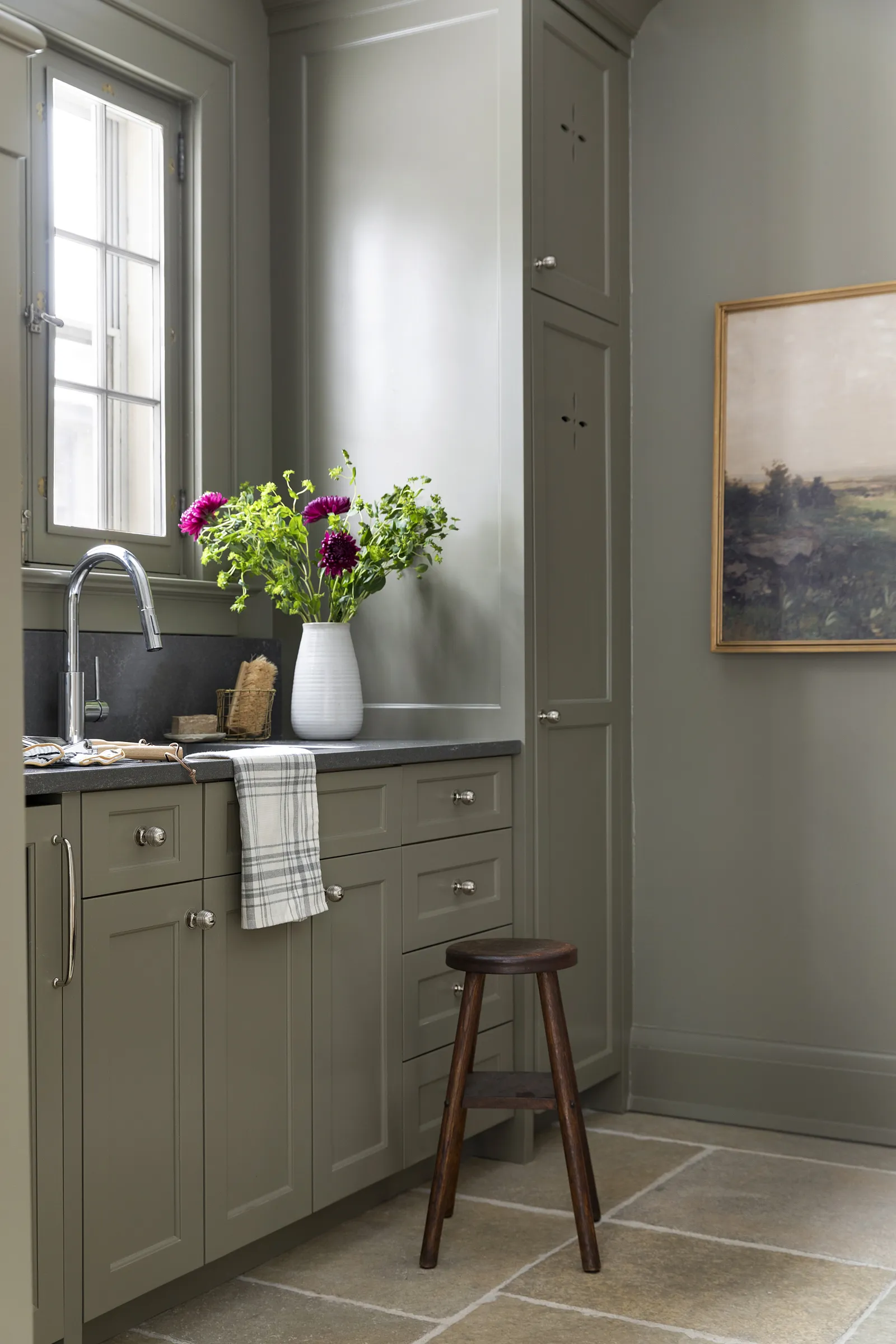
And the ‘what’s your favorite off white’ color may start to fade away, as we lean into the color of the year that increasingly steers away from whites. We think the rooms across a floor plan should stay connected and the colors will compliment one another, but richer tones and deep hues will continue to enter the scene.

4. Disposable, trend-driven decor
Furniture and accessories pushed through social media that are designed to be replaced every few years keep landing in our homes and landfills. As more people invest in following accounts that have value alignment; sharing vintage pieces, handmade work, and furniture built to be handed down, we anticipate the fast-decor cycle to slow down. This my be wishful thinking, but we can hope.

5. Smart-home gadgets tied to one app or hub
Technology ages faster than the house it lives in, this we know. Devices that depend on a single company’s app or hub can become obsolete or unsupported while the walls built around them are still new. We expect the lasting approach to be simple, well-planned infrastructure, such as good wiring, accessible conduit, and flexible lighting circuits, that lets technology change without opening up the walls.
Additionally, today’s appliances are packed with displays, sensors, and connectivity, and those same features can make them harder to keep running. A single failed control board can disable an entire machine, and repair technicians surveyed by a consumer advocacy group named barriers to repair as a major reason appliance lifespans are shrinking.

What these have in common
Each of these trends puts a look or technology ahead of how a family lives and how long a home needs to last. The homes that stay relevant are built on quality materials, flexible layouts, and a point of view that belongs to the people living there.
If you’re looking at your home this season and wondering what’s possible, we’d love to talk. Jesse and Katie are now offering 1:1 fifty five minute consulting sessions, to answer all your questions pre demo, or during your big project. Find us here on Build Bar.
If you’re eager to explore even more possibilities for enhancing your home, consider contacting our team to learn more about our design-and-build services.
Sharing a few recent projects we think you might like:


Ewing Avenue, Oxbow Bend, Summit Avenue
Keep up with our latest inspiration by following us on Pinterest and Instagram.
